

Your vehicle legally and safely on Greek roads
Vehicle Import & Processing
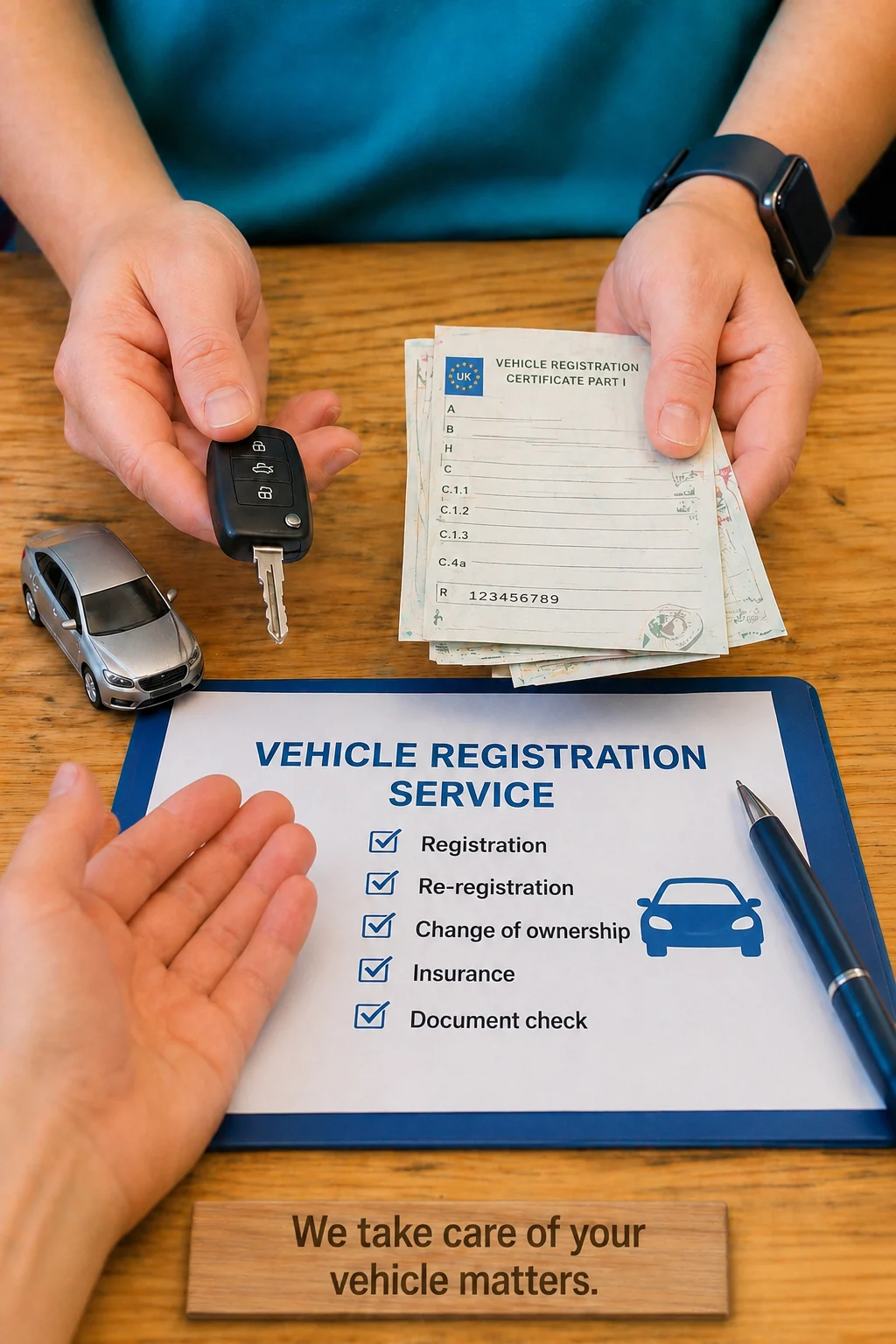
Your vehicle legally and safely on Greek roads
Vehicle import to Greece | A bureaucratic hurdle race with hidden costs.
And that’s exactly where the stress starts for many. Because on paper it all sounds simple – in reality, it often looks very different.
Many people think: “I’ll just drive my car to Greece and register it.” But the Greek customs and tax system for imported vehicles is extremely complex and constantly changing.
If you make mistakes here, you don’t just risk extremely high customs penalties or vehicle seizure, but you’ll get lost in endless procedures between the customs office, Greek MOT (KTEO), tax office and Ministry of Transport. You won’t just lose a lot of money, you’ll quickly lose your mind too. Registration also requires your Greek tax number (AFM). Whether your German licence remains valid is explained in Validity of the German driver’s licence abroad.
For an overview of all steps – from planning to everyday life in Greece – read the guide Moving to Greece.
What does the whole procedure involve?
If needed, we also assist you with the driver’s license re-registration or conversion – if this is required in your case (e.g. in case of loss, damage, or an expired document).
Car import at a glance
If you move your residence to Greece, you must register your car in Greece. This involves a customs declaration, the registration tax, the roadworthiness test at a KTEO centre and Greek number plates. When you relocate, a tax-free import is possible under certain conditions. This page reflects the situation as of October 2026.
How long you may drive with German plates
Only people whose usual residence is abroad may drive with foreign plates: for up to 6 months within 12 months. If you move to Greece, you only have about one month for the customs declaration. Your residence is the country where you live for at least 185 days a year.
Since 2026, the Greek authorities have been checking cars with foreign plates much more strictly. In case of violations, the taxes become due immediately, plus heavy fines up to confiscation of the vehicle.
The process step by step
- Arrival declaration at customs with the mileage, right after entering the country.
- Special declaration at the customs office within 30 days. The registration tax is assessed and paid here, or the tax-free relocation import is checked.
- Roadworthiness test at the KTEO, the Greek MOT.
- Digital registration certificate from customs.
- Number plates and registration document from the regional transport authority.
- Insurance with a Greek insurer and deregistration of the car in Germany.
How the registration tax is calculated
The registration tax is based on the list price of the car when new. For used cars, this value is reduced according to age and mileage. Surcharges or reductions are added for CO₂ emissions and the emission standard. The tax rises in steps with the value and can be very high for more expensive cars.
- Hybrids pay 50% less.
- Fully electric cars pay no registration tax.
- Cars with emission standard Euro 3 or older cannot be registered in Greece.
Whether importing your car is worth it, we are happy to calculate with you in the initial consultation.
Tax-free import when relocating
If you move your residence to Greece, you can import one car without registration tax under these conditions:
- You have lived abroad for at least 24 months.
- You have used the car yourself for at least 6 months and you own it outright.
- The vehicle tax in Germany has been paid regularly.
- It applies to one car per person, emission standard Euro 4 or newer.
- Before the move you need a certificate from the Greek consulate. It is valid for 12 months.
- The customs declaration must be made within one month of entry.
After that, you may not sell or lend the car for one year. A later sale in the first years is only possible with customs approval and may trigger a back payment.
Documents you need
- Registration certificate parts I and II in the original
- Passport or ID card and Greek tax number
- Proof of VAT paid or purchase invoice
- Emissions certificate and mileage
- Proof of insurance
- For the tax-free relocation import also: consulate certificate and proof of your previous residence
Vehicle tax and driving licence in Greece
Greek vehicle tax is due every year by 31 December. Fixed surcharges apply if you pay late. Your German EU driving licence remains valid in Greece. When an exchange makes sense is explained in the article Validity of the German driving licence in another EU country.
Common mistakes
- Driving with German plates for months after the move.
- Missing the 30-day deadline at customs.
- Bringing a car with Euro 3 or older.
- Not applying for the consulate certificate before the move.
- Selling or lending the car in the first year after a tax-free import.
How we support you
We explain the process, review the documents with you and prepare every step: from customs and the KTEO to the Greek number plates.
Frequently asked questions about car import
In many cases, no. Some things can be prepared remotely; for other appointments, your presence is required.
What applies in your case depends on the vehicle and your situation. We will clarify this in an initial consultation before you take any action.
That depends heavily on your vehicle. With newer cars that have low CO2 emissions, as well as hybrid or electric vehicles, import fees are often moderate, so bringing it along can be worthwhile. With older vehicles (low Euro emissions standard), large engine displacement, or high pollutant emissions, however, the government taxes can be very high. That’s why we check your car’s details in advance, so you don’t get any nasty surprises.
As a tourist, you may drive your vehicle in Greece for up to 6 months (180 days) at a time. However, if you move your main residence to Greece or work here permanently, you must officially import and re-register the vehicle in good time. Warning: If you exceed these deadlines, customs will conduct strict checks, and you face very high fines or even confiscation of your car.
The total costs for vehicle import always consist of two parts:
1. Our service fee: For guiding you through the process, preparing your documents and coordinating the individual steps, we charge a service fee of €450 (incl. 24% VAT).
2. State duties & taxes: Additionally, state fees apply. These include customs duties (registration tax), the costs for the Greek MOT (KTEO), the Greek vehicle tax, and the fees for the new license plates.
Important: These state costs are calculated individually for each vehicle and depend significantly on factors such as make, model, year of manufacture, engine capacity, vehicle type (emission class), and purchase price of the vehicle.
For this reason, we cannot provide specific flat-rate costs for state duties in advance.
